
2009
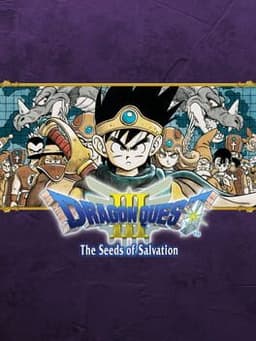
Dragon Quest III: The Seeds of Salvation
Session Respect Score
"Classic open-world RPG with flexible party building and day/night cycles."
Minimum session
20 min
Pausability
At save points
Resume friendliness
Some reorientation
FOMO pressure
Low FOMO
Focus required
Moderate
Session structure
Open-ended
Where to play


Similar games






More in the Dragon Quest series




Platforms
Age Rating


About
Dragon Quest III is noted for greatly expanding upon the original Dragon Warrior and Dragon Warrior II. The game uses basic console role-playing game conventions, such as leveling up by gaining experience points and equipping items. Battle is turn-based like the other games in the series. Dragon Warrior III features a class system, in which each character has a certain class. While the Hero always keeps the Hero class, the other characters can choose among the following: Soldier (Warrior in the GBC version), Fighter, Pilgrim (Cleric), Wizard (Mage), Merchant (Dealer), Goof-Off (Jester), Sage, and Thief which was available only in the later versions. The choice of class greatly affects the character's stats and spells he or she can learn. Furthermore, upon reaching experience Level 20, a character has the option of changing classes at the temple of Dhama, found halfway through the game. The game starts with just the Hero in the party, who then is able to recruit a party of three at the local tavern. Unlike most Dragon Quest parties, aside from the Hero, the party is not made up of characters involved in the story. Although only four characters can be in the party at a time, extra members of the party can be kept at the tavern, allowing room for new recruits. Another innovation is an arena where the player can place bets on the outcome of monster battles. The remakes incorporated some interface changes from later games in the series, such as simplified door opening; the bag, which replaced bank item storage; the item sorting "Tidy Item" and "Tidy Bag" commands; and the "Full HP" command, which can be used outside of combat to automate the process of casting healing and status restoring spells. While the earlier Dragon Quest games were also non-linear, Dragon Quest III was the most substantial example of open-world gameplay among the early Dragon Quest games. It also allowed the player to swap characters in and out of the party at will, and another "major innovation was the introduction of day/night cycles; certain items, characters, and quests are only accessible at certain times of day."
Dragon Quest III is set many years before the original Dragon Quest in a world bearing great similarity to the real world. A wicked fiend, Baramos, threatens to destroy the world. The hero, son or daughter (you can choose to be either male or female) of the legendary Ortega, recruits up to three travelling companions a…
Media
Community Tips
Be the first to leave a tip!
Sign in to add a tip
Community Session Data
No session logs yet.
Context Tags
No sound needed? One-handed? Good for commutes? Players vote.
Sign in to vote on tags
Platform Notes
Does it actually work well on your platform? Community tested.
Dragon Quest III: The Seeds of Salvation — Session FAQ
- How long does a session of Dragon Quest III: The Seeds of Salvation take?
- The minimum meaningful session for Dragon Quest III: The Seeds of Salvation is approximately 20 minutes. This is the shortest play window where you can make real progress or have a satisfying experience, based on community data.
- Can you pause Dragon Quest III: The Seeds of Salvation?
- Dragon Quest III: The Seeds of Salvation uses save points or manual saves. You'll need to reach a checkpoint before exiting to avoid losing progress — factor this into your session planning.
- Does Dragon Quest III: The Seeds of Salvation pressure you to keep playing?
- Dragon Quest III: The Seeds of Salvation has low FOMO. There may be some narrative momentum, but the game doesn't pressure you to keep playing. Natural stopping points are common.
- What is Dragon Quest III: The Seeds of Salvation's Session Respect Score?
- Dragon Quest III: The Seeds of Salvation has a Session Respect Score of 6.5/10. This score combines minimum session length, pausability, FOMO level, and pickup friendliness into a single metric for how well the game fits busy schedules.